
Jennifer Hanes MS, RDN, LD
Ever had those days when you wake up feeling a bit off, as if the world decided to paint itself in shades of gray? Well, you’re not alone. We’ve all experienced those moody mornings and stressful afternoons.
But what if I told you there’s a fascinating connection between the food you eat and the way you feel?
In this blog post, we’re going to explore the link between your diet and your mood.
You see, serotonin is like your brain’s personal happiness hormone, and what you put on your plate can significantly impact its levels.
We’ll unravel this connection, breaking it down into plain language so you can harness the power of your food to boost your spirits.
Understanding Serotonin
Serotonin is one of our 4 “happy hormones,” along with dopamine, endorphins, and oxytocin.
It is a neurotransmitter produced both in your brain and your gut. Neurotransmitters are chemicals produced by your body to carry messages between your brain to the rest of your body.
Serotonin plays a number of different roles, depending on where it is in your body:
- Mood regulation – this is what most people think of when they hear about serotonin. It plays a large role in promoting feelings of happiness.
- When serotonin levels are normal, people feel focused, calm, and emotionally stable
- Digestion – serotonin regulates how quickly your gut moves your food through the digestive tract.
- When you eat a food that is irritating to your gut, serotonin is released rapidly, causing you to speed the digestion process to get rid of it. This can also cause feelings of nausea
- Serotonin, along with the hormone leptin, also plays a role in feelings of fullness while eating.
- Sleep – Serotonin can be further processed in your brain to become melatonin. Melatonin and dopamine both play important parts in your sleep duration and quality.
- Wound Healing – when you have a wound, serotonin causes your blood vessels in the area to stop bleeding, the first part of the wound healing process.
- Bone Health – adequate levels of serotonin, meaning not too high or too low, maintains a normal bone density which can prevent the development of osteoporosis.
- Sexual health – serotonin and dopamine both influence your desire for sexual activity.
- Learning and memory – High levels of serotonin has been shown to boost an adult’s ability to learn quickly and store this knowledge in long term memory.
- Blood sugar regulation – serotonin is part of a team of hormones and neurotransmitters that directs your pancreas to release insulin.
- when insulin is not released adequately, you will crave sugar, further complicating your glucose control
How is Serotonin Made?
Serotonin is made both in your brain and your gut. This is important because serotonin has very important functions in both places, but cannot cross from the blood into your brain they other nutrients and messengers can.
Serotonin is made from an amino acid called tryptophan. Amino acids are basically the building block of protein. We can actually create some amino acids ourselves, however, tryptophan has to come from our food.
Through a series of reactions, our body uses B vitamins to transform tryptophan into serotonin, and then later melatonin.
And although we typically associate tryptophan with turkey, there are actually quite a few foods that contain tryptophan. More on that in a bit.
Importantly, tryptophan cannot travel into the brain on its own. It requires a carbohydrate “carrier.” This is why people on very low carb diets often experience irritability, bad mood, and difficulty sleeping. Though often, it’s only the people around them that recognize this!

Serotonin in the Brain
Serotonin in the brain is what we are primarily concerned with today. This is the serotonin source that affects our mood.
It is also the region of the body and the particular chemical that many anti-depressant medications target.
Serotonin in the Gut
Approximately 90% of your body’s serotonin is actually produced in your intestinal tract. There are some differences in the function of serotonin in and out of the brain, though they are structurally identical.
There’s a reason the gut is often called the “second brain.”
At this time science does not support the idea that serotonin produced by the gut directly affects our mood. This is because serotonin cannot travel into the brain. It must be made in the brain to affect our mood.
However, there may be some mental health benefits to gut-produced serotonin in a more round-about way. The going theory right now is that serotonin positively affects the gut microbiome in other ways that does communicate to the brain via the Vagus nerve.
I cannot stress enough that we have a lot more research to do in this arena.
What happens when serotonin levels are chronically low?
Low serotonin levels have been linked to a number of behavioral health complications, including mood disorders (such as bipolar disorder and depression), anxiety, insomnia, obsessive-compulsive disorder, and post-traumatic stress disorder.
Can You Have Too Much Serotonin?
You can, and it can actually be quite dangerous! However, does NOT happen when you eat a diet that promotes serotonin production.
Serotonin Syndrome occurs as aserious drug reaction and can have symptoms that range from mild shivering and diarrhea to severe muscle rigidity, seizures, and fever. This can even lead to death if not treated in a timely manner.
Serotonin syndrome can occur when more than one medication or supplement is given that increases serotonin activity. However, this can also happen when illicit substances and/or dietary supplements are combined with medications.
This is why it is absolutely imperative that your doctor and your pharmacist are aware of all medications and all supplements or drugs you may be taking.
The Serotonin-Diet Connection
As discussed above, several nutrients are required to produce serotonin:
- Tryptophan – an amino acid that is the main building block of serotonin
- Vitamins B6 (pyridoxine) and B3 (niacin) – metabolic factors in the conversion of tryptophan to serotonin
- Vitamin D – activates an enzyme involved in the conversion of tryptophan to serotonin
- Carbohydrates – helps carry the materials for serotonin synthesis into the brain.
When looking at overall dietary patterns, traditional diets have shown to be better for mental health than western style diets. While the Mediterranean diet is often cited, other traditional diets also show promise.
There is a small body of evidence that suggests the traditional diet of our own culture may be the diet that is best for us. This could be due to inadequate research, genetic variations impacting nutrient metabolism, and differing microbiomes (as these first pass from mother to baby).
Foods that Boost Serotonin
While the following foods are high in nutrients that aid in adequate serotonin production, we need to think of these as foods to include in a varied diet. This is not meant to encourage you to exclude other foods!
Foods high in tryptophan:
- Milk/dairy
- Fish
- Poultry
- Oats
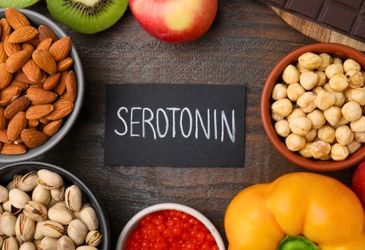
- Nuts and seeds
- Dark Chocolate
- Some fruits – particularly pineapple, plantains, bananas, kiwis, plums, and tomatoes
Foods high in Vitamin B6:
- Chickpeas
- Beef liver
- Poultry
- Fish
- Fortified Cereals
- Potatoes
- Bananas
- Most other fruits and vegetables also have B6 in smaller amounts as well
Foods High in Vitamin B3:
- Beef Liver
- Poultry
- Fish
- Pork
- Rice
- Beans
- Nuts and Seeds
- Whole Grains
You’ll notice a lot of crossover in these foods!
Foods High in Vitamin D:
- Fish
- Mushrooms
- Fortified Milk
- However, sunlight is the best source of natural vitamin D. Most people should consider wearing sunscreen and taking a Vitamin D supplement.
What about carbohydrates?
Carbohydrates aren’t involved in the metabolic process of synthesizing serotonin. However, carbs are required to get the ingredients into the brain.
Choose complex carbs from whole grains, fruits, starchy vegetables, and legumes more often when possible.
Foods to Avoid or Limit
When you first start drinking, you’re body will actually increase serotonin, accounting for that initial feeling of calm and happiness. However, long-term, alcohol use reduces both the amount and the action of serotonin.
Meaning you’ll have very little serotonin, and what you do have doesn’t work very well.
Caffeine
This one is tricky. Coffee seems to actually improve the efficacy of serotonin. So our serotonin levels don’t change, but it works better.
It appears this happens because caffeine prompts the brain to increase the number serotonin receptors. This also appears to be why caffeine withdrawal makes us feel “a bit” crabby.
On the other hand, caffeine inhibits the absorption of iron and b vitamins, potentially making serotonin production more difficult.
Because caffeine is consistently indicated in increasing anxiety and interfering with sleep, I recommend you keep your coffee intake reasonable, and in the morning!
Fructose
But only in very few of us! Fructose malabsorption is a medical condition in which you do not breakdown fructose properly. When fructose levels rise in the gut, tryptophan absorption suffers as well.
As a result you do not have enough tryptophan available to produce serotonin, even if you ate enough of it.
If you have fructose malabsorption, make sure to follow the diet prescribed by your dietitian to avoid gastrointestinal distress and potential mental health concerns.
Trans fats
It appears that trans fats interfere with functioning of omega-3 fatty acids, such as fish oil and those in nuts, seeds, olives, and avocados.
Since these anti-inflammatory conditions can no longer do their job when your diet contains a lot of trans fats, you can experience a cascade of inflammatory conditions that challenge your ability to produce serotonin.
Luckily, food manufacturers were compelled by legislation in the US to eliminate the use of trans fats. And these fats only occur in very tiny amounts in the natural food supply.
The Importance of Meal Timing
There is some evidence that those that work shift work have up to a 40% higher risk of depression and anxiety.
A VERY small study simulated shift work in participants and found that those that only ate during “normal” meal times (during the day) reported less symptoms of depression and anxiety than those that at both during the day and during the night.
This is the exact type of study that demonstrates the importance of comparing “the literature” to real life people. There is no way I would advise someone working a 12 hour overnight shift to avoid eating because of this study.
I would wager a larger study that is better done would oppose these results. Because lack of consistent intake causes wide swings in blood glucose, which contributes to unstable moods.
And restricting a person’s ability to eat has a high likelihood of causing micronutrient deficiencies which is STRONGLY linked to mental health struggles, even if serotonin production wasn’t a concern.
Intermittent Fasting
A different type of time restricted eating, Intermittent Fasting (IF) has also been really popular lately, particularly for weight loss. Proponents like to throw around words like ‘autophagy’ to make them sound more authoritative.
Big words are impressive, right?
However, there isn’t really any definitive evidence that IF is beneficial to overall health, let alone mental health.
And risks associated with IF include potentially triggering eating disorder behaviors for those that are predisposed, compensatory overeating, and low blood sugar (definitely not good for mental health).
In scouring for research on IF and mental health, I came across a study done on 10 rats that indicated fasted rats had higher levels of serotonin and no change in dopamine. There’s so much wrong with this, the most obvious being that the study was done on rats. And only 10 of them.
Another article mentioned that ghrelin (the “hunger hormone”) seems to increase neuroplasticity and “stimulates serotonergic neurons.”
However, you don’t have to fast to increase ghrelin. That’s literally a normal response to your brain wanting more fuel. And you already fast every night…
Lifestyle Factors and Serotonin
Other than diet, there are a few lifestyle factors that you can include that help encourage normal serotonin production, including adequate hydration, pro and prebiotic foods, regular exercise, and regular exposure to sunlight.
Not that you should attempt to incorporate all of these factors right away. Choose 1 thing we’ve discussed here to get started. And as that becomes a cemented habit, you can work on the next thing.
Sample Serotonin-Boosting Meal Plan
Here’s a sample 3 day meal plan that provides all the nutrients needed for normal serotonin production in the brain.
I’m not really a proponent of following meal plans to the letter. Instead, use this to get ideas that you can fit into your routine.
Day 1
Breakfast
Greek yogurt parfait (1 cup plain Greek yogurt, 1/2 cup granola, 1/2 cup mixed berries, 1 tbsp honey)
Lunch
Mediterranean Salad (2 cups mixed greens, 1/2 cup chickpeas, 1/2 cup cherry tomatoes, 1/4 cup feta cheese, 1/4 cup olives, 1 tbsp olive oil, 1 tbsp balsamic vinegar
Dinner
Grilled Chicken with Quinoa and veggies (4 oz grilled chicken breast, 1/2 cup cooked quinoa, 1 cup steamed mixed veggies dressed with 1 Tbsp olive oil and 1 Tbsp lemon juice)
Snack 1
Hummus and veggie sticks (1/4 cup hummus, 1 cup raw veggies such as carrots, celery, and bell peppers)
Snack 2
Almonds and dried apricots (1/4 cup each)
Day 2
Breakfast
Smoothie Bowl (1 cup almond milk, 1/2 cup frozen mixed berries, 1/2 banana, 1 scoop protein powder, 1/4 cup granola)
Lunch
Tuna Salad Wrap (1 whole grain wrap, 3 oz canned tuna, 1/4 cup chopped celery, 1/4 cup chopped red onion, 1 tbsp mayo, 1 cup mixed greens)
Dinner
Shrimp and Vegetable Stir Fry (4 oz cooked shrimp, 1 cup mixed stir-fry vegetables, 1/2 cup cooked brown rice, 1 Tbsp olive oil, 1 tbsp soy sauce)
Snack 1
Cottage Cheese (1 cup)and Pineapple Chunks (1/2 cup)
Snack 2
Dark Chocolate (1 oz) and Almonds (1/4 cup)
Day 3
Breakfast
Oatmeal with Fruit and Nuts (1 cup cooked oatmeal, 1/2 cup mixed berries, 1/4 cup chopped walnuts, 1 Tbsp honey)
Lunch
Caprese Salad (2 cups mixed greens, 1/2 cup cherry tomatoes, 1/2 cup fresh mozzarella, 1/4 cup fresh basil, 1 Tbsp olive oil, 1 Tbsp balsamic vinegar)
Dinner
Lentil and Vegetable Curry (1 cup cooked lentils, 1 cup mixed vegetables, 1/2 cup cooked brown rice, 1 Tbsp olive oil, 1 Tbsp curry powder)
Snack 1
Cheese (1 oz) and whole grain crackers (1/2 cup)
Snack 2
Celery Sticks (1 cup) with Cream Cheese (2 Tbsp) and raisins (1/4 cup).
Remember that I created this meal “plan” for a fictional person without any specific health conditions or needs. You may need more or less, at any given meal or snack.
Look for ideas in the sample above, and practice your mindful eating. Respond to hunger and fullness to ensure that your brain is getting adequate nutrients and fuel throughout your day.
Also, spice it up! This is a very simple write up, meant to be easy to read. Feel free to add more spices, sauces, or other flavors to make it enjoyable.
Can Supplements Help?
There are a few supplements that may improve depression in general or serotonin specifically. ALWAYS tell your doctor about any supplements you are taking, or considering.
Here’s a super quick review:
Tryptophan: if you’re eating enough protein from dairy, poultry, fish, nuts, seeds, and oats, you likely won’t need further supplementation of tryptophan.
5-HTP: this is the precursor to serotonin, and does seem to help alleviate mild symptoms of depression and anxiety. However, potential serious side effects can include anxiety, shivering, and serious heart problems.
Mild side effects can include drowsiness, digestive issues, and sexual dysfunction. If you are taking an anti-depressant medication it is strongly advised to avoid taking 5-HTP due to the risk of Serotonin Syndrome.
St John’s Wort: St John’s Wort is often recommended for depression, and it is in fact an SSRI, just like many common anti-depressant medications. It can be pretty effect in mild cases of depression.
Side Effects can include agitation, dizziness, diarrhea or constipation, dry mouth, fatigue, insomnia, headache, or increased sensitivity to sunlight.
Again, never take this supplement if taking prescription anti-depressant medication. Do not take if pregnant or breastfeeding.
SAMe (S-Adenosyl Methionine): this is another amino acid that, when supplemented, appears to increase levels of serotonin and dopamine levels in the brain, as well as increasing the activity of serotonin and dopamine receptors in the brain.
For some reason, studies indicate this supplement may be more effective in males.
Stomach upset is the most commonly reported side effect of SAMe. However, it can trigger manic episodes in individuals with bipolar disorder and worsen symptoms in individuals with obsessive compulsive disorder or struggle with addiction.
And again, tell your doctor if you are taking this supplement, especially if you are considering prescription anti-depressants.
I strongly encourage, my clients to be cautious with supplements for a few reasons. Supplements are not as strictly regulated as medications are and there is profound variability in the accuracy of the labels.
They are not as strongly research either, so potential side effects, medication interactions, or other problems may not be as evident or well-known.
If you want to try the supplements listed above, I would strongly encourage you to speak to your doctor and/or pharmacist. And try one, not all of them.
Final Thoughts
So, there you have it, folks! The serotonin-diet connection isn’t just some scientific mumbo-jumbo; it’s a real thing that can make a big difference in how you feel day-to-day.
Whether it’s adding more bananas and turkey to your plate or getting out for a stroll in the sunshine, you’ve got the power to give your mood a little boost.
Remember, it’s all about balance and making small, sustainable changes to your eating and lifestyle habits. And if you ever need some extra guidance, don’t hesitate to reach out and schedule an appointment with me!
So go ahead, take care of your serotonin, and let your good vibes shine. Your plate, and your brain, will thank you for it!

